
Haywood Projected Versus Actual Release
A projected date is a calculation based on the sentence record as it stands at that time. An actual release date records what occurred after processing, credits, court orders, parole action, and holds were resolved. A date shown for eligibility does not certify that the person will leave then. It may only mark when parole can first be considered.
Custody type determines whether a projection exists. A person awaiting trial at Haywood County Jail has not yet received a sentence from which a sentence-based date can be computed. Bond, dismissal, plea, judgment, a detainer, or another court order can change custody. For a person serving a local sentence, the jail and sentencing clerk hold the most useful calculation records. For a state felony sentence, TDOC calculates sentence and release information.
The Haywood County sheriff releases or transfers a local detainee. A judge enters a sentence or other order. TDOC calculates state eligibility and sentence information, while the Tennessee Board of Parole makes parole decisions. Keeping those roles separate prevents one agency's date from being assigned to another agency's act.
Find Haywood County Release Dates
Begin by identifying the last custodian and the legal status. The same name may appear in a county booking, a court case, and a TDOC record, but the systems answer different questions. Match the full name with date of birth or age, booking date, case number, and TOMIS number when available.
- For a current or recent Haywood jail stay, call 731-772-6158 and ask whether the person is pretrial or sentenced, and whether a projection is maintained.
- Search the Haywood court portal for the filed judgment, sentence, jail credit, bond, or later order.
- For a Tennessee felony sentence, open TDOC FOIL and search by last name, adding first name or TOMIS ID.
- Open the matched state record and preserve the exact label for each sentence, release, eligibility, or expiration field.
- Ask the responsible agency to confirm the current calculation and check for detainers, new orders, or unresolved conditions.
FOIL covers felony offenders currently or formerly in TDOC custody or supervision. It does not cover every short Haywood County jail episode. The court portal explains judicial authority, but it does not prove the time of physical departure. The county and state paths must remain distinct.
TDOC Dates for Haywood Offenders
The official TDOC offender-search overview says FOIL may provide photograph, status, location, offense, sentence, parole-hearing status, and release information. Its former-offender coverage makes it the public starting point for a Haywood County person who served a state felony sentence. A result should be matched by identifiers and offenses, not by name alone.
The interface does not guarantee that each record contains a field literally called “Projected Release Date.” Record the words on the live result. A Release Eligibility Date, often called RED, has a different meaning from sentence expiration or an actual release date. If no future date is shown, do not calculate one from a sentence headline.
The FOIL name and TOMIS search screen illustrates the official entry fields used to locate a state record.
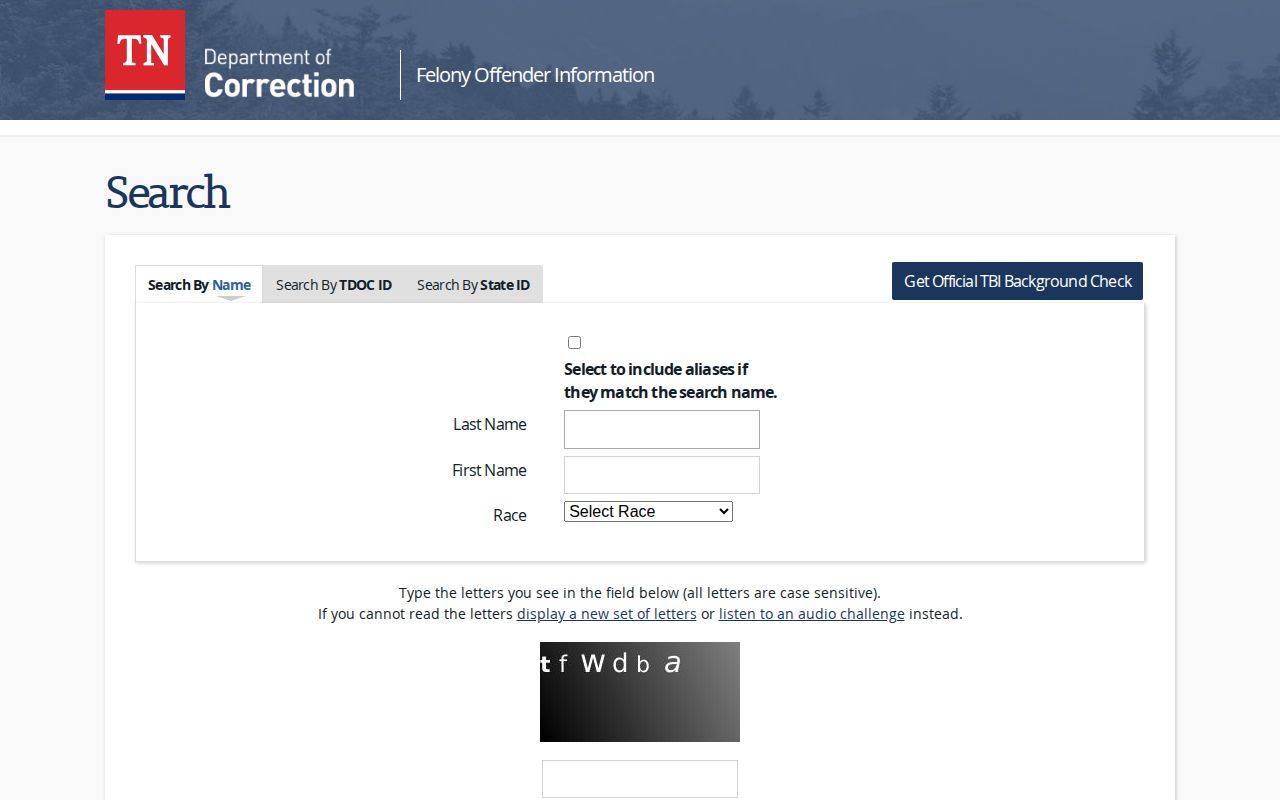
The search screen leads to dynamic records that carry a timeliness warning. Save the lookup date, quote the status and field label, and contact TDOC when the result conflicts with the signed judgment or a jail record.
Haywood Release Date Terms
Several dates can appear in one case. They form a sequence, not a set of synonyms. The signed judgment identifies the sentence. TDOC then applies the governing law, jail credit, sentence structure, and earned or lost credits. The Board may later act on parole, and the institution completes the physical release only after all conditions and holds are checked.
- Release eligibility date
- The point at which the law may allow parole consideration; it is not a release order.
- Parole hearing date
- The date set for a Board proceeding; the schedule may change.
- Projected release
- An agency calculation based on current sentence data and rules.
- Sentence expiration
- The calculated end of the sentence, which can differ from community release under supervision.
- Actual release
- The recorded end of custody at that agency, whether to the community or another custodian.
Parole means conditional community release during a sentence. Probation is court-ordered community supervision and may follow split confinement. Discharge is the legal end of a custody or supervision status. None of those terms should be inferred from a bare future date.
Tennessee Credits for Haywood Release
TCA § 40-35-501 sets release-eligibility percentages and many rules tied to offense, offense date, and sentence. Tennessee does not have one universal 85-percent rule. Some listed offenses and dates use an 85-percent framework with a floor after retained credits. Other offenses require 100 percent, while ordinary range and special provisions differ.
TCA § 41-21-236 governs sentence-reduction credits. The statute permits awards that can range from one to sixteen days per month, with no more than eight for institutional behavior and eight for satisfactory program performance. Credits are not automatic. They are awarded under set criteria and may be reviewed, forfeited, or restored.
For a valid calculation, begin with each signed judgment and offense date. Note the class or range, sentence length, jail credit, and whether sentences run at the same time or one after another. Apply the correct eligibility statute, then post credits and Board action. Finally, check new cases, amended orders, detainers, and release conditions. Only the responsible agency can certify the result.
Local misdemeanor rules also require the actual judgment and statutory framework. The sentencing court fixes a release percentage, and applicable credits cannot reduce that percentage by more than 25 percent. That does not establish that Haywood County publishes its own credit table. Ask jail records staff or the sentencing clerk for the maintained calculation.
Post-2024 Haywood Release Calculations
Tennessee's treatment of some offenses on or after July 1, 2024 creates a crucial split. For a sentence longer than two years, earned credits may move parole eligibility without changing sentence expiration. A closer RED can therefore coexist with the same full expiration date. That is why the label on a FOIL result must be kept intact.
Eligibility starts a decision path. TDOC calculates RED, the Board schedules and decides a hearing, and release can still depend on an approved plan, certificate, and unresolved detainers. A grant is not a gate timestamp. The institution must finish the release process, and the final state record should be checked for the actual date and release type.
This distinction is Haywood-specific in practice because the county has no state prison within its borders. A Haywood felony offender may be held at a TDOC institution elsewhere, while the original court record remains local. Search both records and do not assume a county jail departure and state release describe the same event.
Why Haywood Release Dates Change
A projection moves when the facts or legal inputs behind it move. Some changes add credit, while others delay eligibility or block community release. A generic factor list explains possibilities but does not prove which factor applies to one person.
| Factor | Possible effect | Best record |
|---|---|---|
| Jail credit correction | Changes the time credited before sentence service | Judgment, clerk order, agency computation |
| Earned, lost, or restored credits | Moves an eligible calculation under governing law | TDOC or jail sentence record |
| Concurrent or consecutive sentences | Changes whether terms overlap or follow each other | Signed judgments |
| Parole action | A grant, denial, or deferral changes the decision path | Board record and FOIL |
| Amended judgment or new case | Changes the legal sentence inputs | Court docket and filed order |
| Detainer or outside hold | May prevent community release or cause transfer | Custodial and receiving-agency records |
Classification, incomplete pre-release conditions, revocation, and sentence aggregation can also affect the record. Ask for the current calculation date and the field definition. Comparing two unlabeled dates without that context can create false precision.
Note: A detainer can end one facility's custody through transfer while keeping the person confined under another authority.
Request Haywood Release Calculations
When a county date is not online, ask the Haywood County Sheriff's Office for the existing booking, sentence-calculation, and release records tied to the booking. The sheriff's public-records policy and form allows oral inspection requests and calls for a written request when copies are sought. Provide the full name, booking date or number, and the exact records requested.
For a state sentence, TDOC accepts archived-record requests through its official process. A focused request can seek the release certificate, sentence computation or history, supervision discharge, and the fields needed to separate parole, expiration, and transfer. TDOC warns that archive charges may apply and says not to prepay because it will provide the amount after review.
A court order is essential when the online docket is abbreviated. The clerk can supply the filed judgment, amended judgment, sentence, jail-credit determination, probation order, or revocation. The custodial agency still supplies the actual release timestamp.
Confirm Haywood Actual Release
For Haywood County Jail, use the official sheriff contact route and ask whether the person physically left, the date and time, the recorded disposition, and whether another agency took custody. A disappearance from a roster is ambiguous. Bond release, sentence completion, transfer, and an outside pickup all remove a person from one facility in different ways. Ask which maintained record supports the answer and preserve the booking number used for the match.
For state custody, compare FOIL with TDOC or Board records. A parole status means supervised community release, not unconditional sentence discharge. “Inactive” is even broader; it does not reveal whether the cause was expiration, discharge, death, transfer, or administrative closure.
A pending event can also be monitored through the Haywood County VINELink inmate search, but an alert must be confirmed with the agency that supplied it. Scheduled dates are planning clues. The certified release or transfer record answers what happened.
Record the date of each check. Dynamic sentence, custody, and notification fields can change after a new order or agency update.